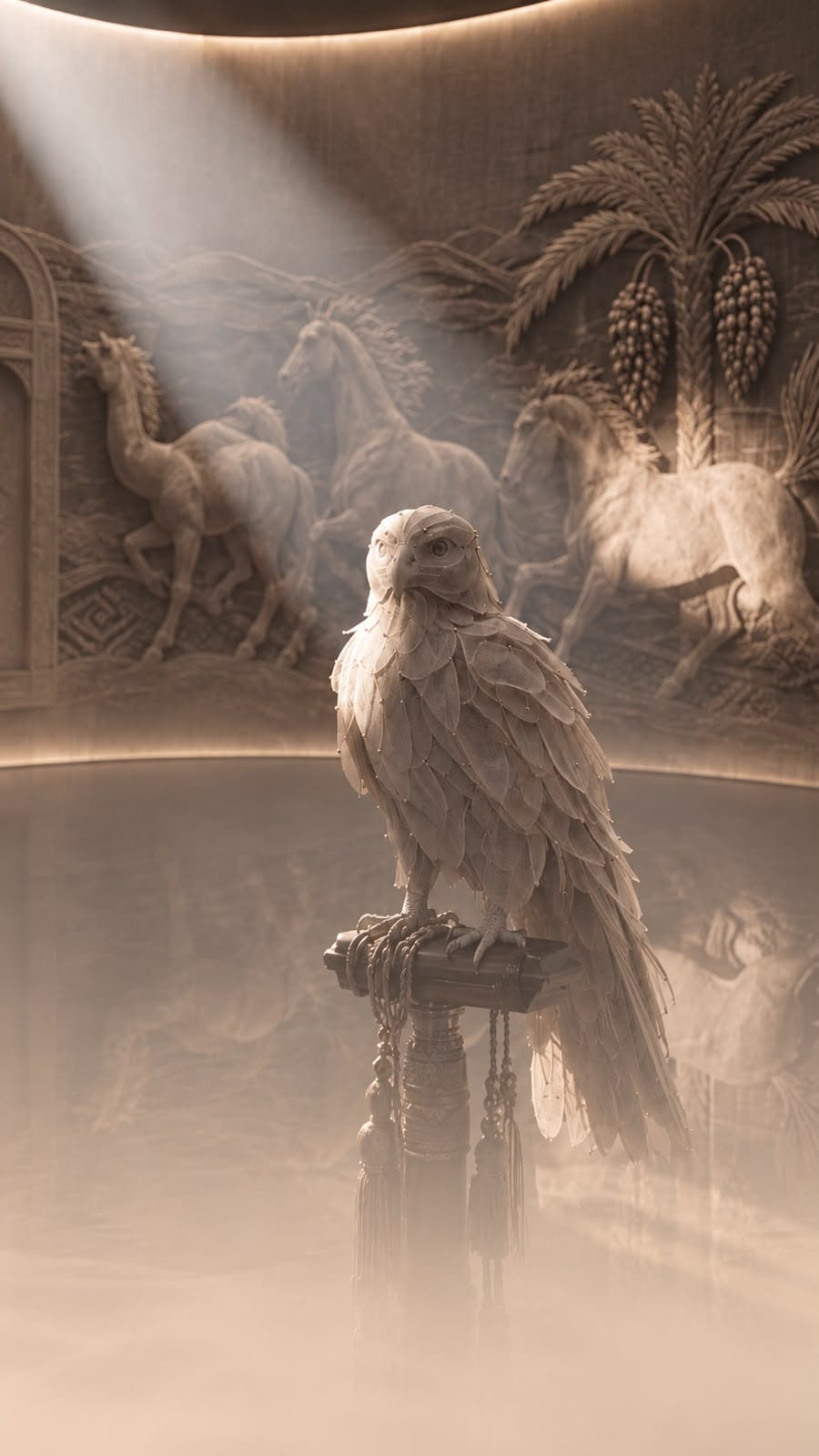
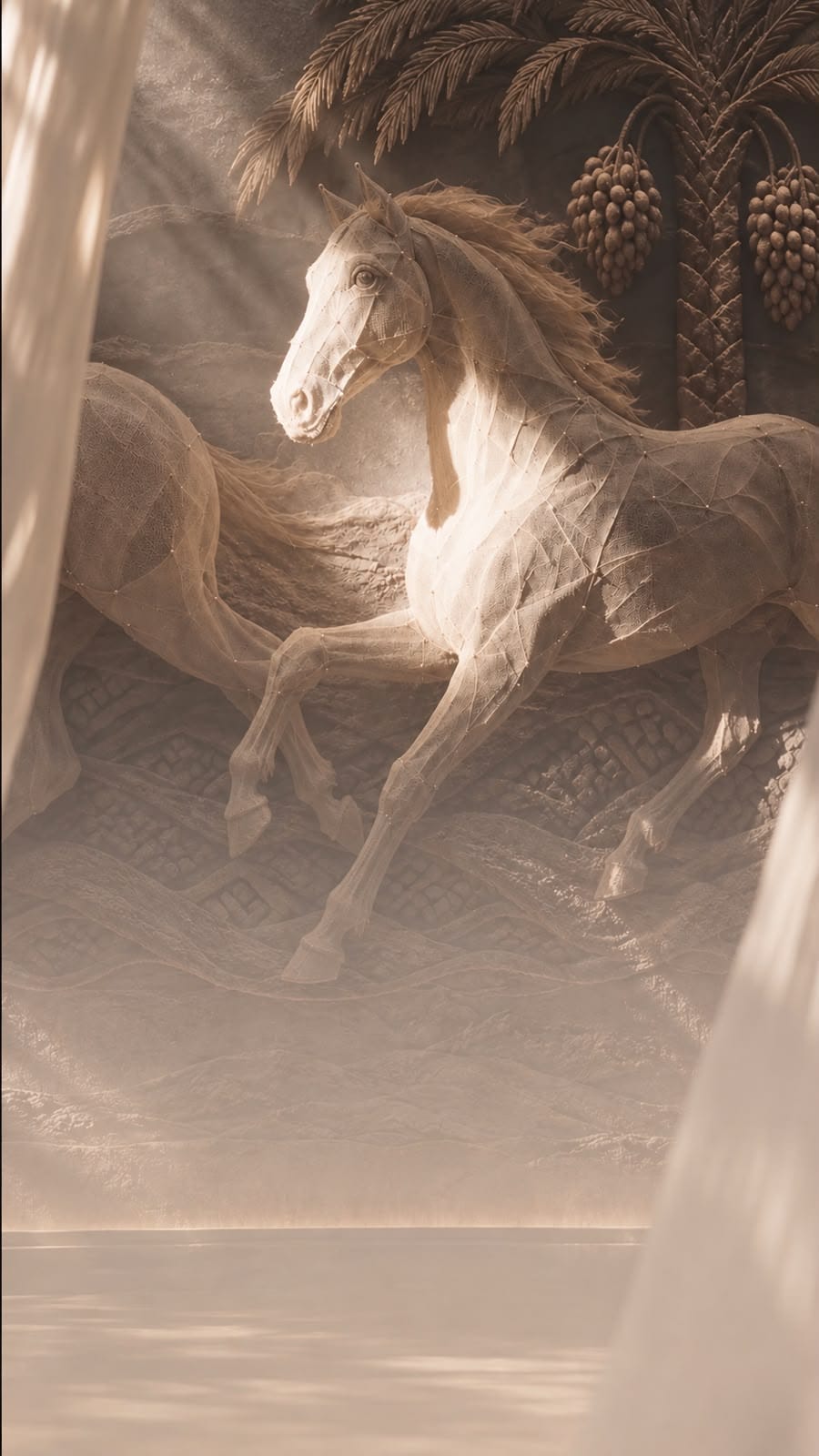
On the occasion of Saudi National Day 96 in 2026, this collaboration brought me together with artist Oumaima Taleb in an encounter between word and design. It was a work that did not rely on green to define its identity, nor did it use national symbols in their familiar form. Instead, it reintroduced aspects of the Kingdom through a contemporary visual language, expressing that belonging does not appear in a single color, but in the imprint the homeland leaves on us and in everything we create.
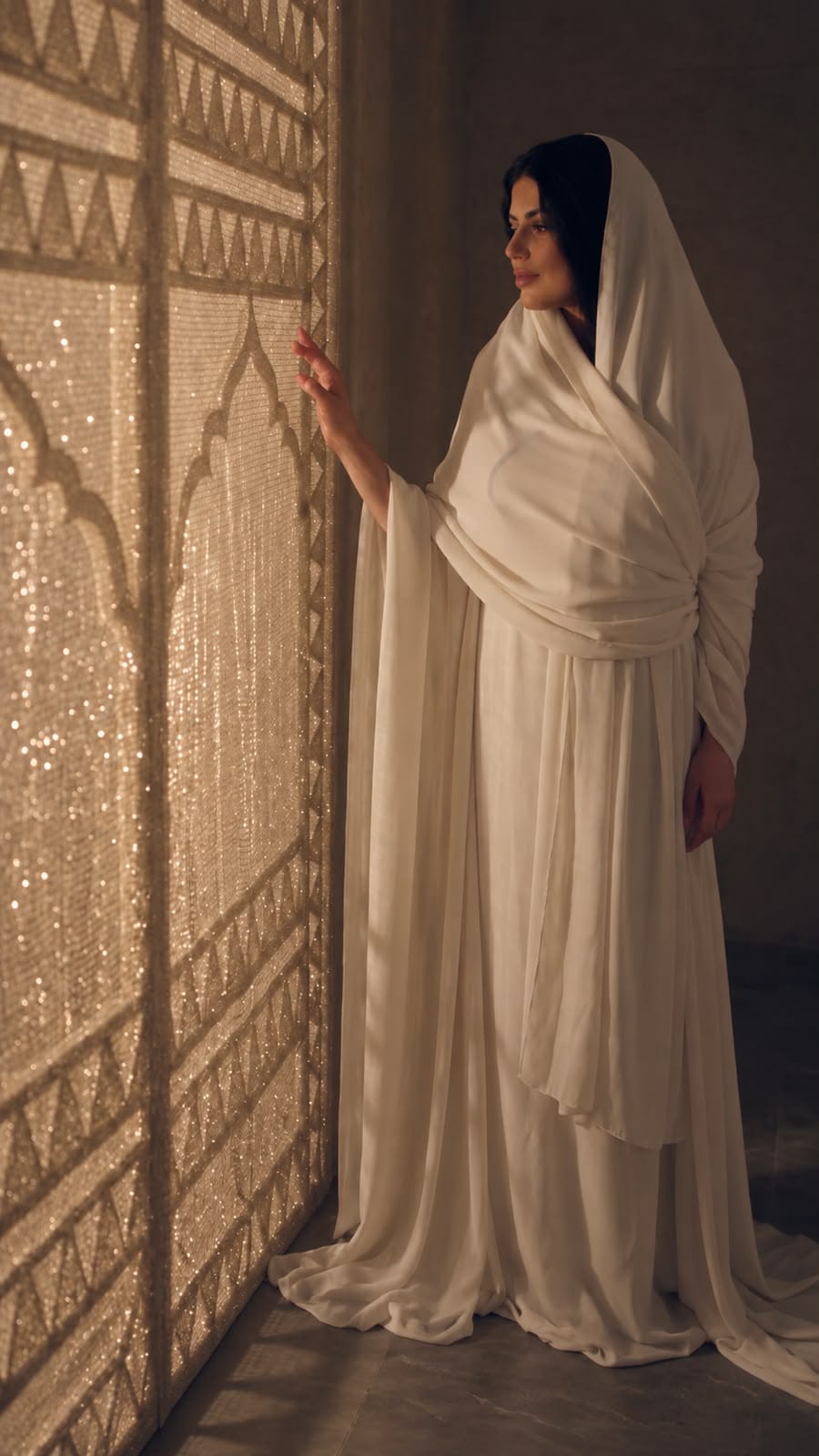
Why 'From It'?
The name carries the essence of the entire collaboration.
'From It' means that what we see and hear did not have the homeland added to it from the outside; it came from it. From it the idea was formed, from it the symbols emerged, from it the words drew their meaning, and from it my vision for the scene began.
We do not create the homeland, nor do we give it its identity. We come from it - from its land, its culture, its memory, and from what it has given us: the ability to see ourselves and express that identity in our own way.
That is why 'From It' was not simply the title of the work, but the summary of its meaning: everything we make carries an imprint of the place we come from.
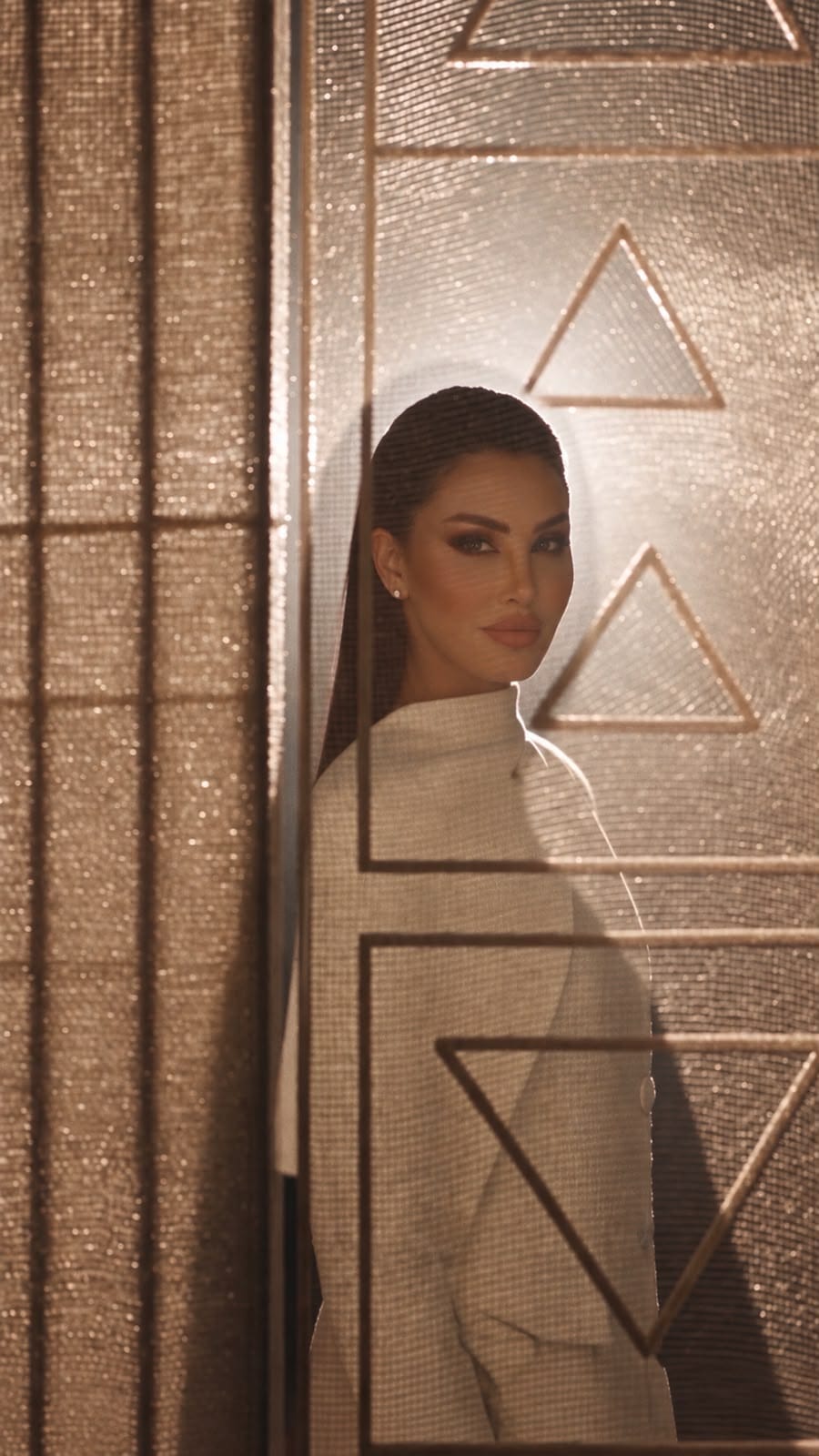
The Question That Started the Idea
“They asked me: What does the homeland mean to you?”
I paused at the question, not because the answer was distant, but because it was too large to be reduced to a definition, a scene, or a single symbol. To me, the homeland is the origin from which our vision is formed; it is the memory that gave our taste its character, and the imprint that appears in what we create even when we do not consciously try to show it.
I did not look for an answer that described the homeland in words. I looked for a way to make its presence felt - in the details, in the material, in the light, and in symbols we already know but would see this time from a different angle.
The question was the beginning of the collaboration. The answer extended through everything that came after it.
Two Voices for One Meaning
“They told me: Sing…”
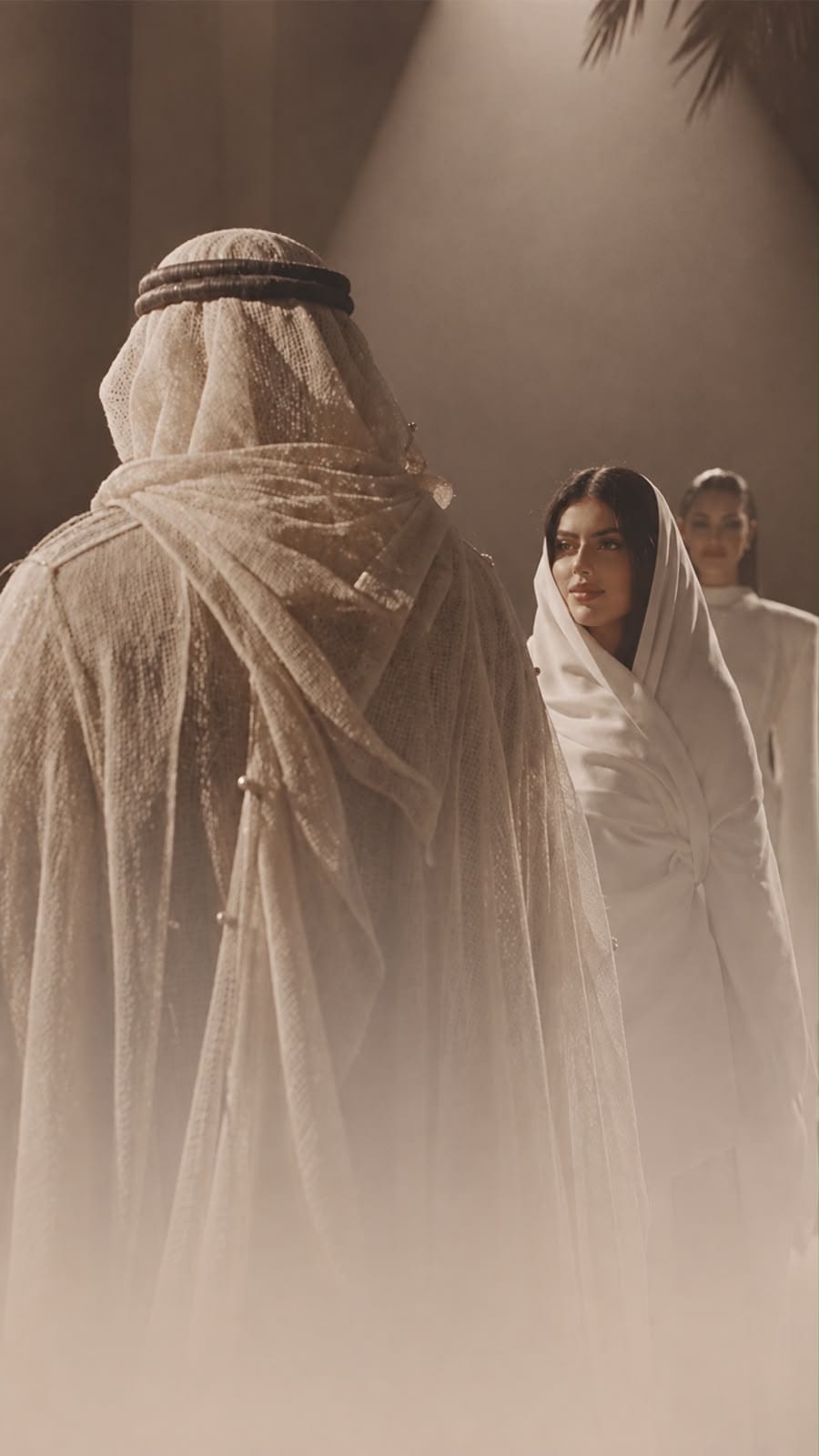
From these words comes Oumaima's voice - not through a song, but through a text she delivers with her own emotional sensibility. Her voice does not explain the image; it gives it another dimension and takes the meaning somewhere more intimate and more truthful.
My answer, meanwhile, appears through design: in the scene I built, in the details I selected, and in the way the symbols came together within a single space.
Oumaima expresses through word and voice; I express through material and composition. Each of us has her own language, but both languages began from the same source.
The idea was not for us to say the same thing in two different ways, but for each of us to add to the meaning what the other could not provide alone. When word and design came together, 'From It' appeared as one idea that needed very little explanation.
Saudi Arabia Without Green
One of my most important decisions in this collaboration was not to rely on green as the quickest visual shorthand for Saudi Arabia.
Identity is deeper than a color, and the homeland is larger than a single visual symbol.
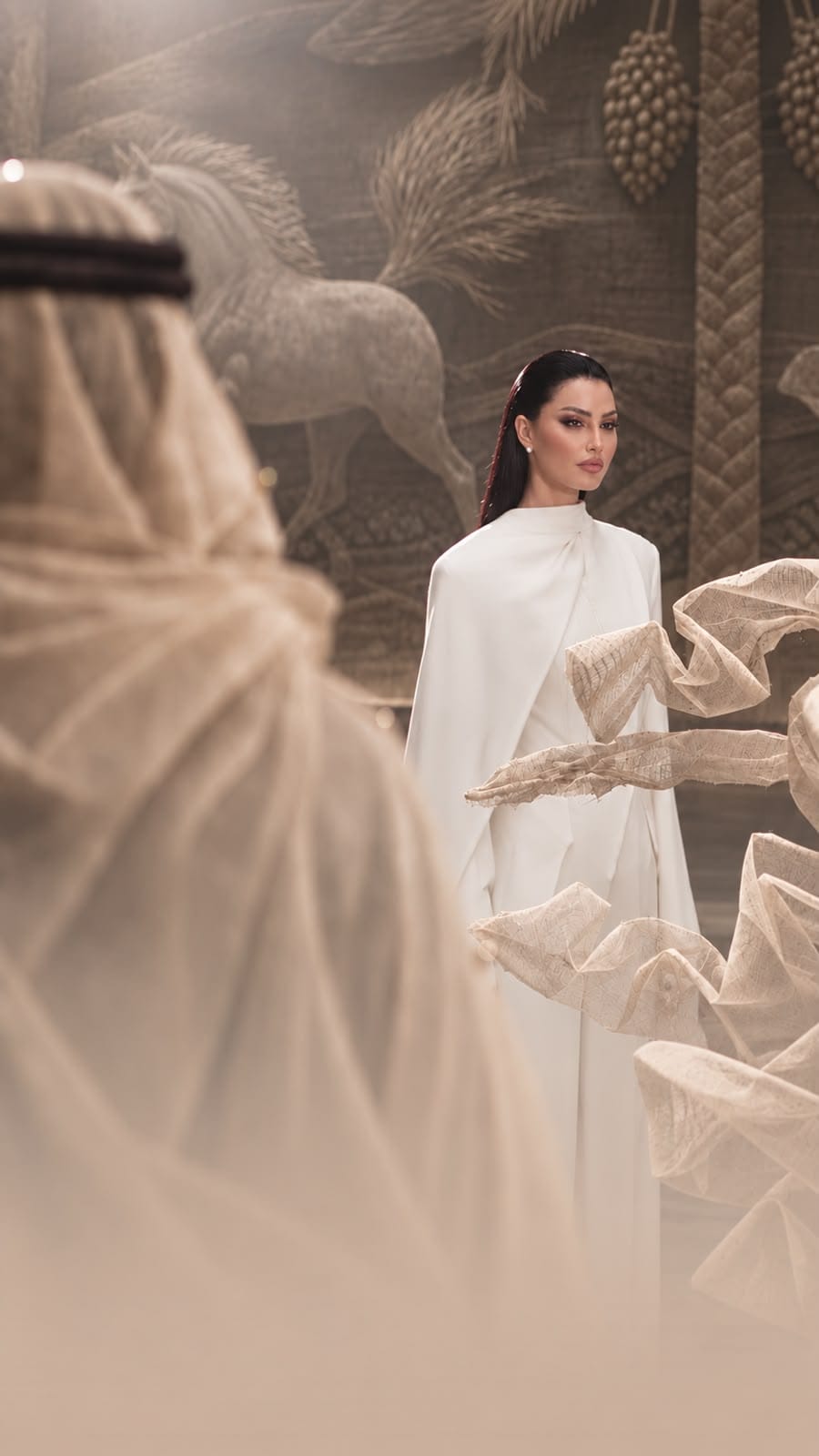
We chose tones of sand, ivory, and earth - colors connected to the nature of the land, the warmth of light, and the breadth of the desert. The space remained quiet in color but rich in meaning, allowing belonging to emerge through the composition as a whole rather than through one direct signal.
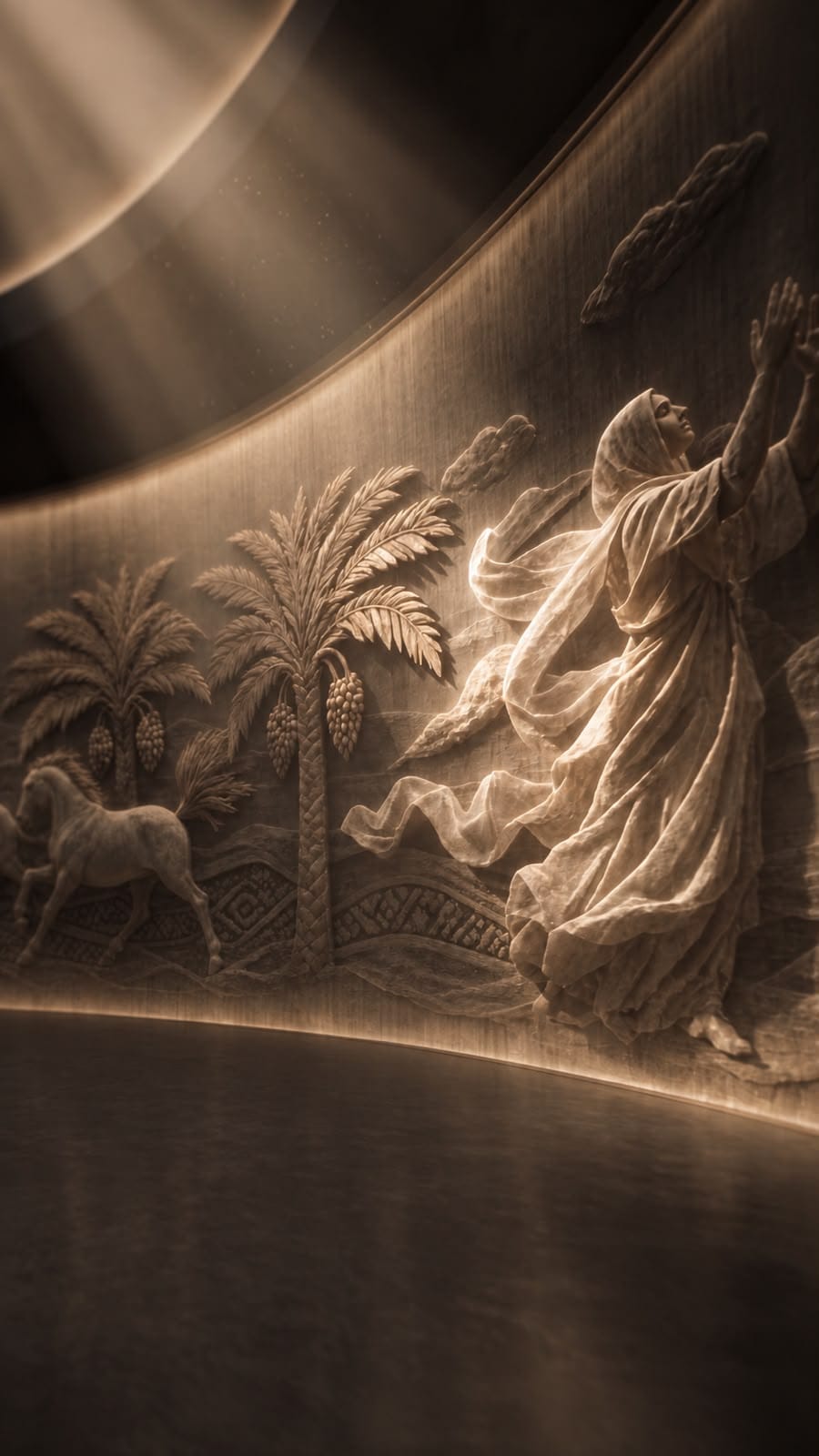
The absence of green was not a move away from identity, but an attempt to move closer to other layers within it. We wanted the viewer to recognize Saudi Arabia through its horses, falcons, palms, architecture, patterns, and human presence - to feel it before searching for the color they are used to associating with it.
Familiar Symbols, A New Language
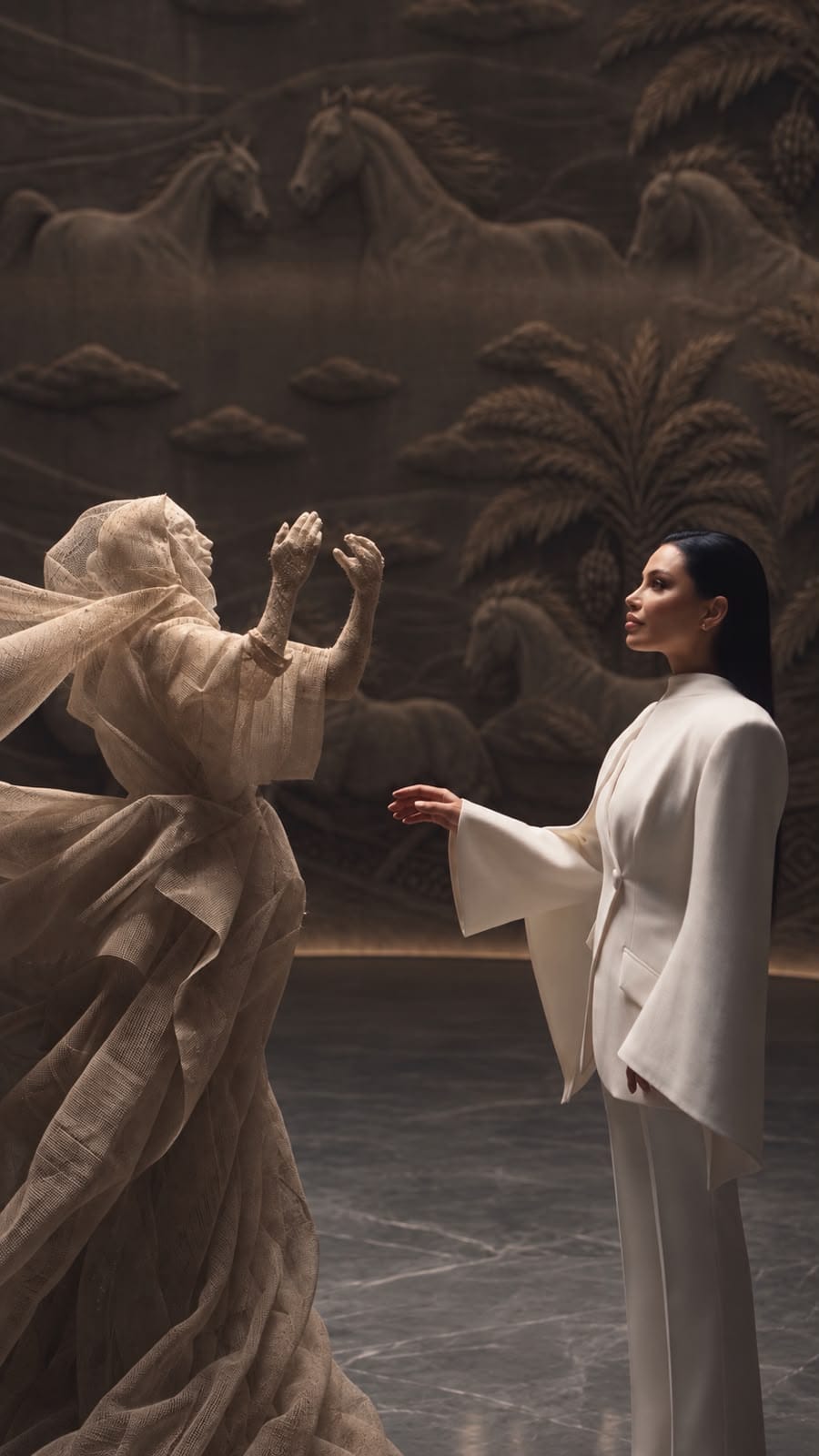
The horse appears in the scene carrying meanings of authenticity, strength, and continuity in Saudi memory. The falcon appears as a symbol of determination and pride, while the camel recalls the relationship between people and the land and what it represents of patience and steadfastness.
The palm arrives carrying meanings of generosity, giving, and roots. Architecture and Najdi patterns connect the scene to place and history. Human features and Saudi dress also appear as part of the identity - not as isolated elements, but as an extension of the same visual world.
We did not want these symbols to appear in a documentary or traditional way. We reshaped them through one material and within a closely related palette, so they would appear as though they had emerged from the same textile and the same land.
Each element tells one part of the Kingdom's story. Together, they create a broader image: a homeland rich in its history, confident in its present, and capable of presenting its identity in a new language.
The Material That Built the Scene
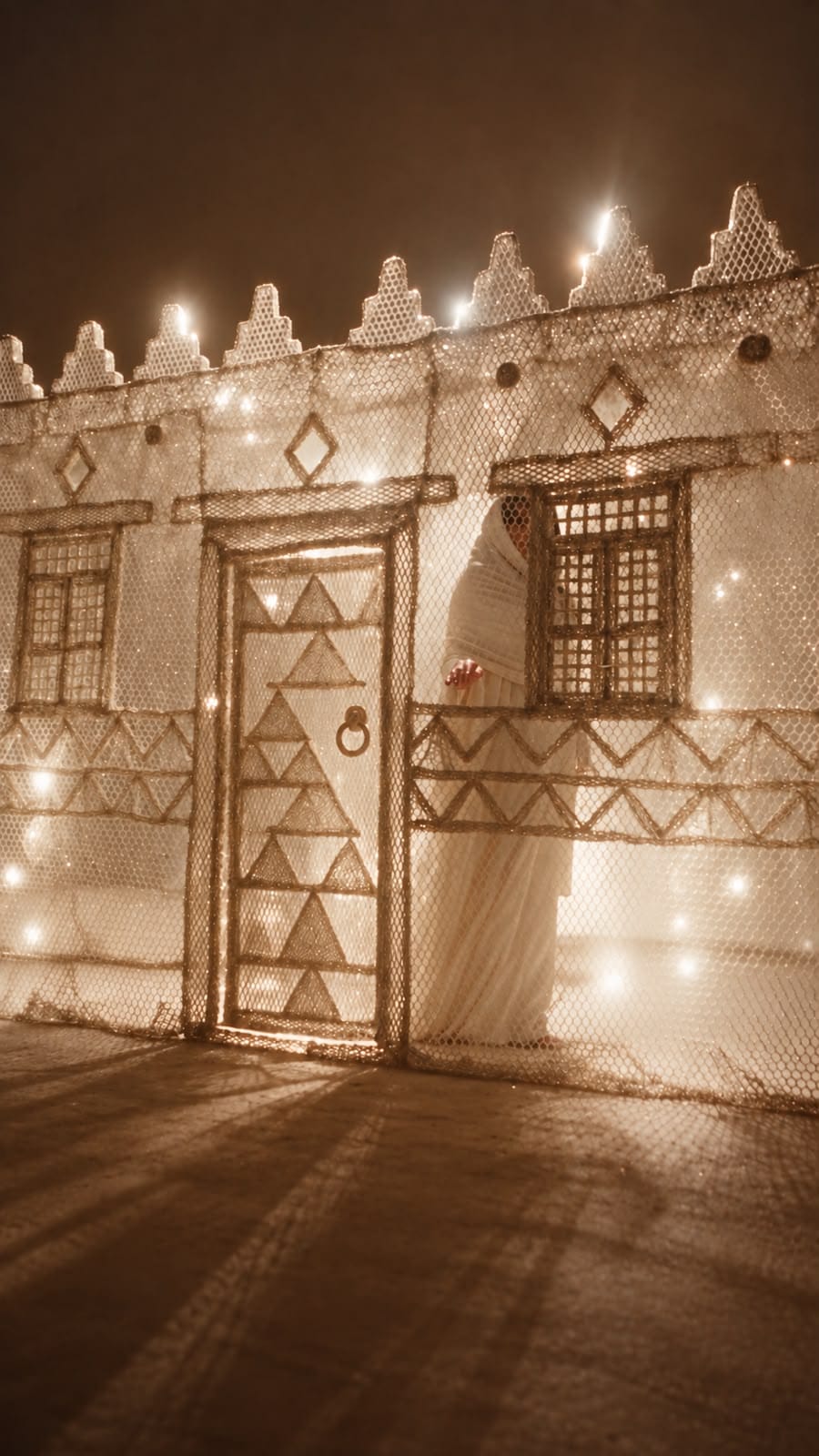
The elements were built from a transparent, stretched mesh textile that allowed light to pass through it and reveal the layers and details of the work.
Choosing this material was not purely aesthetic. The textile combines lightness with strength, and clarity with transparency; its presence changes with light and angle. At one moment it can appear delicate, then shift into a clear mass carrying the features of a horse, a falcon, or a human figure.
Using the same material to form different elements created a visual connection between them. Despite the diversity of the symbols, they all appeared to belong to one world, as though woven from a shared origin.
This comes close to the meaning of 'From It': different forms and multiple expressions, but one source.
Light as Part of the Story
Light gave the material its life and revealed its details without taking away its calmness. It passed through the textile, drew the shadows of the patterns, and gradually revealed the features of the symbols, allowing the image to change with every angle.
I wanted light to become an extension of the idea of the collaboration. The homeland is present in the scene without being literal; its imprint appears the closer we move toward the details. It does not force itself onto the image, but gives the image its meaning and depth.
Together with the sand and ivory tones, the light created a warm and balanced feeling, bringing together memory and modernity, the solidity of the symbols, and the delicacy of the material from which they were formed.
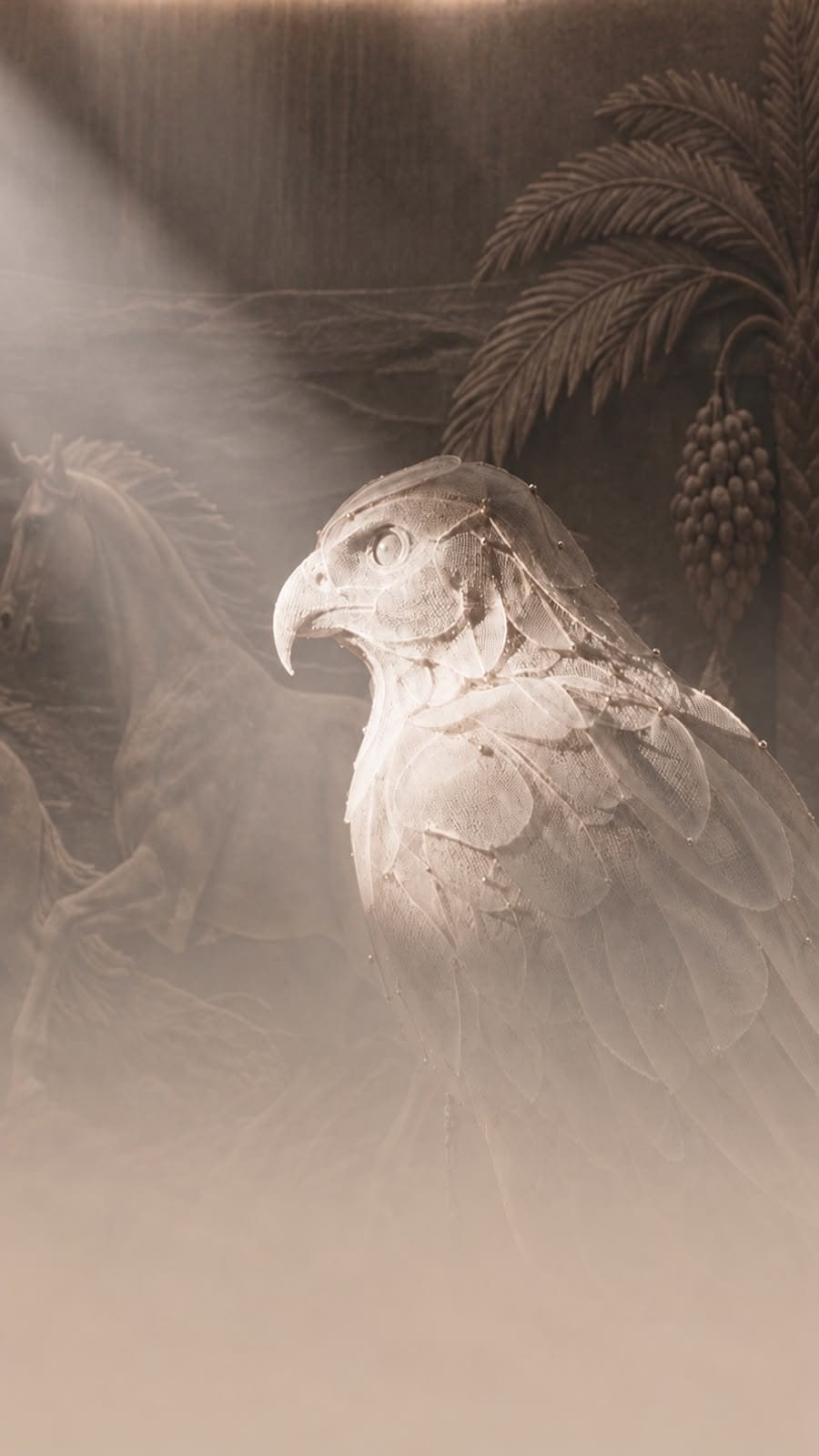
Everything I Create... Carries Something From It
When I say, 'Everything I create... carries something from it,' I do not mean that I place the homeland inside what I make. I mean that what I create began from it.
From its culture that shaped my taste, from its details that taught me how to see beauty, and from its values that influenced my understanding of people, place, and experience.
Projects may change, tools may evolve, and the visual language may renew itself, but an imprint remains in the work that brings me back to the origin. The homeland is not a subject we add to an idea after it is complete; it is the starting point from which the idea is formed from its very first moment.
That is why the Saudi symbols in 'From It' appeared without green, and why the materials were contemporary without losing their connection to identity. We were not trying to prove that the work was Saudi; we were creating it from a vision shaped in Saudi Arabia, and its belonging therefore appeared naturally.
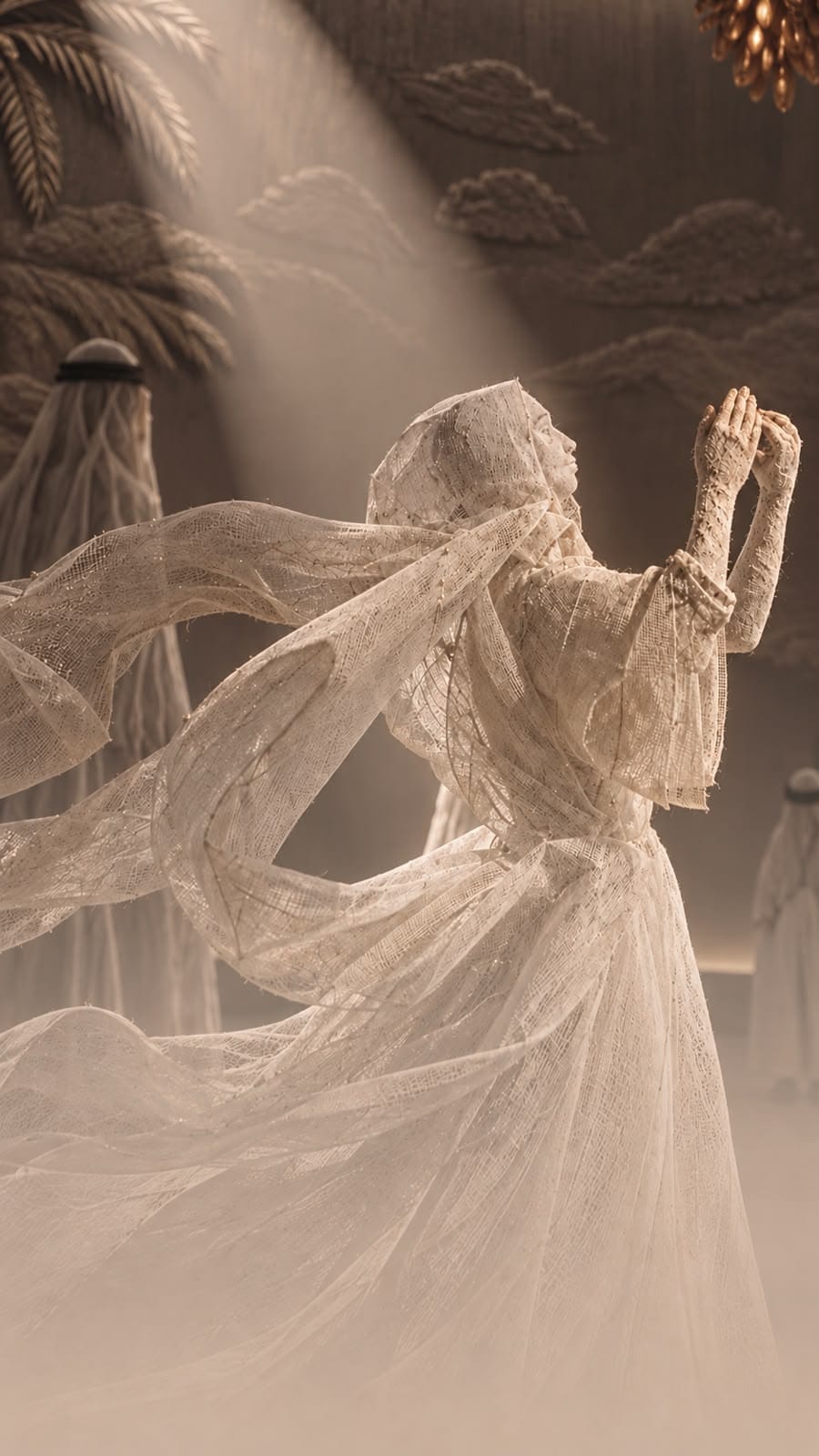
Because We Are From It
'From It' is a collaboration about the homeland's imprint on us, and about identity when it appears honestly without needing the usual ways of expressing it.
It is a space where Saudi symbols came together within a contemporary vision, and where material, light, and words became one language saying that belonging is not defined by colors alone, but revealed by details that could only come from this place.
No matter how our methods differ, how our tools evolve, or how many languages we use to express ourselves, the homeland will remain the origin of the story - the source from which our vision begins and to which the imprint of what we create returns.
From it comes everything within us... and no matter how much we give, we can never fully repay it.